
Health Care
Remote Medical International: to your (global) health
By Gianni Truzzi September 9, 2011

This article originally appeared in the October 2011 issue of Seattle magazine.
Calling the field employees of Remote Medical International (RMI) adventurous might be an understatement. They are spread across the globe, providing remote-area medical care and rescue services in African oilfields, aboard oceangoing ships, on tropical islands and even during Antarctic expeditions.
Its what you might expect from a company founded by CEO Andrew Cull, who explains, I always thought working in a clinic in a war zone might be fun.
Remote Medicals specialists in wilderness medicine provide businesses and individuals with assistance in the remotest parts of the world where lifesaving help would otherwise be days or weeks away. Their services, paid for either on a subscription or fee basis, includes direct medical care, emergency training, supply provision through an online store and telemedicine.
For example, RMI might provide an on-site medic for an oil rig in the Gulf of Mexico, a gas field in the Canadian wilderness or a tanker ship at sea. An individual sailing a boat around the world might pay a subscription fee to obtain medical services in an emergency. An isolated research station in the South Pacific for the National Science Foundation might pay for a telemedicine consultation or to have someone evacuated to a place where he or she can receive medical attention.
The company even offers training to U.S. Army medics, who apply in the combat conditions of Afghanistan the Wilderness EMT and rope-rescue certifications they earned through RMI. Our job is to enable people to be safe in most settings, says COO Mark Hamachek, and a lot of these settings are very dangerous places.
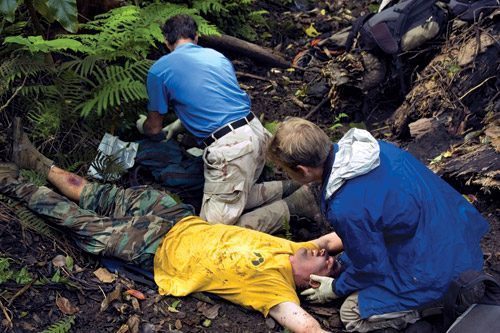 Its a business in which Cull, a mountain climber since he was 14, has found a firm foothold. Since 2005, RMI has grown by nearly 3,000 percent, from $223,927 in revenues to $6.8 million in 2010. Cull reports that the company is on track to achieve revenues of $12 million in 2011.
Thats an enviable record for any first-time businessperson. Its even more impressive when you learn that Cull is only 33 years old.
In Tacoma, Cull was trained in mountain rescue at age 16, and at 17 he was hiking on Argentinas Aconcagua, the highest peak in the Americas. In college, he supported himself both sailing and as a guide on mountain treks, climbing peaks all over the world.
One of four children of a physician, Cull always felt at home with medicine, and he enjoyed studying science. Yet when he started studying for a pre-medical degree at Western Washington University, he chafed at the needless competition, which was so unlike the team survival ethic of climbing.
I decided I didnt want to go into that culture for another four years, he recalls. Cull still has the notes from his college organic chemistry class in 2003, where the details of protein combination end and his mind map of the businessof how not to do this anymoretake over the remaining pages.
But Cull found that banks would not offer a line of credit to a 25-year-old with no prior business experience. Instead, he borrowed $18,000 from an uncle, lived on his wifes salary as a program manager with the Girl Scouts and operated the company out of a bedroom in their Alki home. Cull took no salary for the first five years, feeding his paramedics paycheck into the business and using credit cards to meet payroll when necessary.
By 2007, RMI had been focused on providing training and selling equipment online when it received a request from the National Science Foundation to provide medical support services in the field. From that first enterprise-level client, the business launched its remarkable record of growth.
My first glimpse of Cull was in RMIs stockroom. He was dressed in jeans and knee-deep in a hodgepodge of medical supplies. A hands-on CEO, he was helping to sort through the returned remnants of a field hospital in India after a hasty bug-out.
RMI has gradually colonized the industrial office park near Fishermens Terminal in Magnolia. When asked how many employees he has, Cull isnt sure of the precise current number (its around 74 worldwide); hes been out of town and his team has been staffing while he was away.
The tight-knit home crew of 24 works to the sound of drills, saws and hammers that ready stations for new hires. When Cull returns from a trip, some hired in his absence are surprised to learn that the young and softspoken new guy is the top boss.
RMIs offices seem casual, full of jeans and Patagonia jackets, and even dogs under desks. But hiring is selective, with employees often chosen from more than 50 applicants for each post. And despite the computers and widespread use of telemedicine, Cull says, Were not a technology company. Were a get-it-done company.
Even Hamachek, his COO, was trained in wilderness medicine, taught 10 years ago by Cull. If you ever watch any of our staff in action, he observes, theres the same thing you see in combat, where the reaction is pinpoint, to get it done.
Leading this business into the future, Cull notes, is much scarier than rappelling out of a helicopter for a rescue. Growing a company has no safety checklist, no tethers to secure yourself to. You cant know if youre seeing the right thing or not, he explains.
What surprises him most is how much the business today conforms to the mind map he scribbled in those class notes eight years ago. What I didnt foresee was the size. I thought [revenues of] $5 million would be 100 percent market share. I had no idea.
RMI is still dwarfed by a billion-dollar company like Singapore-based International SOS, the leader in providing medical assistance in out-of-the-way places. But Cull sees few limits to his firms growth, especially as developing countries establish more health and safety regulations. Its why he brought in Hamachek, who can hone operations while Cull focuses on strategy. The opportunity is pretty amazing, he notes.
Cull also looks forward to the day he can spend more time in the wild, perhaps volunteering in a Latin American village. But not at the moment.
The big joke around this place, he says, is that a lot of us were extremely accomplished climbers and adventurers until we started working here.